
Why Do I Feel Dizzy When I Turn My Head? Common Causes Explained
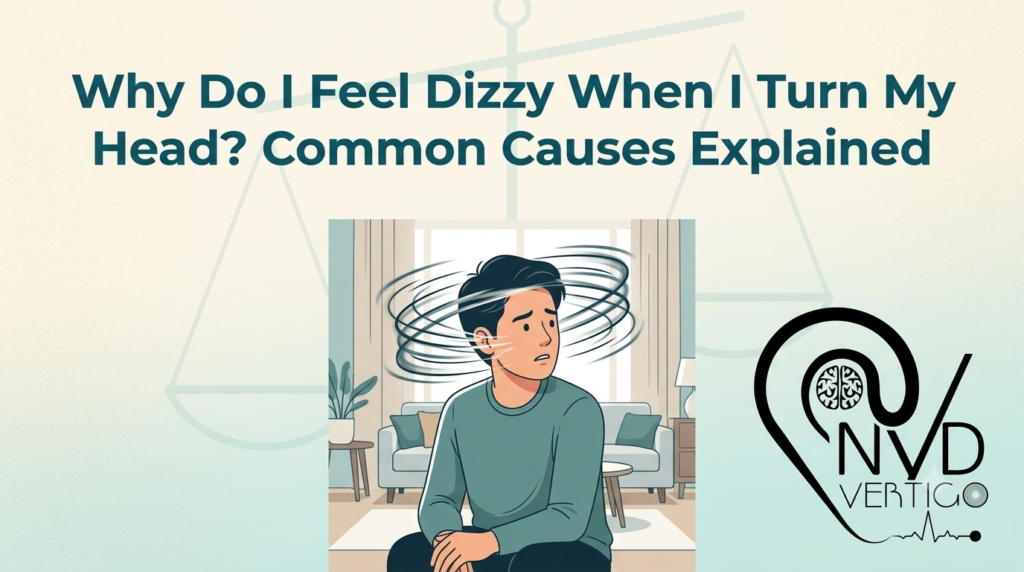
Have you ever felt dizzy when turning your head to look sideways, looking up, or bending down? This sensation can be uncomfortable and may make you feel as though the room is spinning or that you are losing your balance. Head movement-related dizziness is a common symptom, and it can occur for several reasons. Understanding the possible causes can help you determine when to seek medical attention. What Causes Dizziness When Turning Your Head? 1. Benign Paroxysmal Positional Vertigo (BPPV) One of the most common causes of head movement-related dizziness is Benign Paroxysmal Positional Vertigo, commonly known as BPPV. It occurs when tiny calcium crystals inside the inner ear move into the wrong part of the balance system. People with BPPV may experience brief episodes of spinning when turning their head, rolling over in bed, looking upwards, or bending forward. The sensation typically lasts a few seconds to a minute. BPPV can often be treated with specific head and body movements performed by a trained healthcare professional. 2. Vestibular Migraine Vestibular migraine can cause dizziness, a spinning sensation, or difficulty maintaining balance. Unlike a typical migraine, it may occur without a headache. Some people notice that head movements, busy visual environments, or travelling in a vehicle make their symptoms worse. Episodes may last from minutes to hours, and sometimes longer. 3. Inner Ear Disorders The inner ear plays an important role in maintaining balance. Conditions affecting the vestibular system can cause dizziness, nausea, and unsteadiness. Depending on the underlying condition, you may also experience hearing changes, ringing in the ears, or a feeling of fullness in one ear. 4. Neck-Related Problems Some people experience dizziness alongside neck pain, stiffness, or reduced neck movement. Cervical spine problems may contribute to these symptoms, although neck-related dizziness can be difficult to diagnose because other vestibular and neurological conditions may cause similar complaints. 5. Other Possible Causes Dehydration, certain medications, low blood pressure, and neurological conditions can also contribute to dizziness. The pattern of symptoms and accompanying signs help a doctor determine the likely cause. When Should You Consult a Doctor? Occasional dizziness may not always indicate a serious problem, but recurring episodes should not be ignored. Consult a healthcare professional if dizziness interferes with walking, driving, working, or daily activities. Seek emergency medical care if dizziness begins suddenly with difficulty speaking, double vision, weakness or numbness, a severe unusual headache, or an inability to walk normally. How Is Head Movement-Related Dizziness Diagnosed? A doctor may review your medical history, examine your eye movements, assess balance, and perform positional tests when appropriate. Further investigations may be recommended depending on your symptoms. Treatment depends on the cause and may include repositioning manoeuvres, vestibular rehabilitation, medication for selected conditions, or migraine management. Finding the Right Vertigo Specialist in Kolkata If you frequently experience dizziness when turning your head, an accurate diagnosis is the first step towards effective treatment. Consulting an experienced specialist can help identify whether your symptoms originate from the inner ear, migraine, blood pressure changes, or another condition. If you are searching online for the best vertigo doctor Kolkata or a top vertigo doctor Kolkata, look for a specialist experienced in evaluating dizziness and balance disorders.