
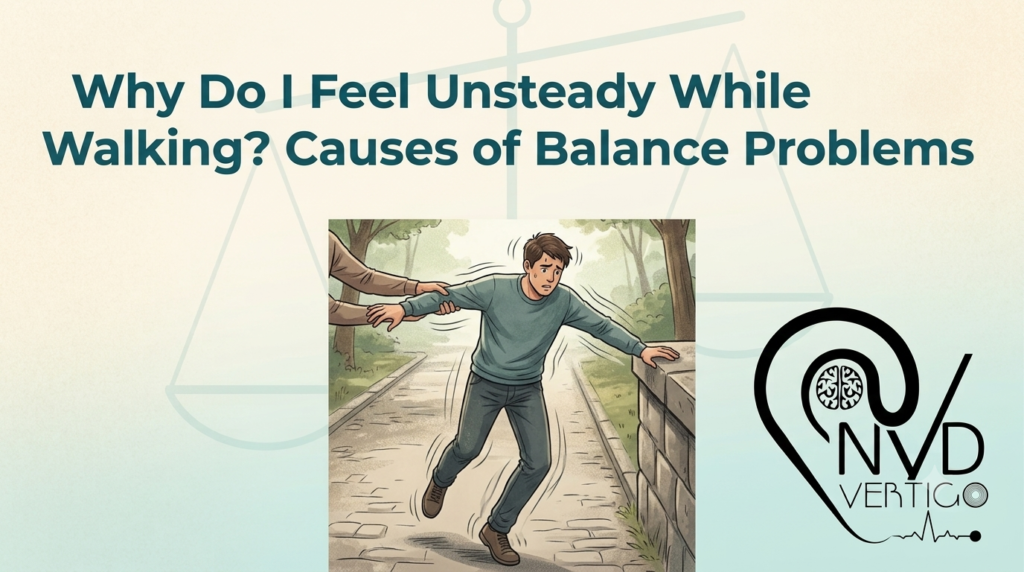
Do you sometimes feel unsteady while walking, as though you might stumble or lose your balance? You may notice yourself holding onto walls, walking more slowly, or feeling uncomfortable on uneven surfaces.
Balance problems can affect people of different ages and may develop gradually or appear suddenly. Although dizziness is one possible cause, not everyone with a balance problem experiences a spinning sensation.
Identifying the underlying cause is important because treatment depends on the body system responsible for maintaining balance.
What Causes Unsteadiness While Walking?
1. Inner Ear and Vestibular Disorders
The inner ear contains structures that help your brain understand the position and movement of your head. When this balance system does not function properly, you may feel dizzy, unsteady, or disoriented while walking.
Vestibular disorders can also cause nausea, difficulty turning your head while moving, and discomfort in visually busy environments.
Benign Paroxysmal Positional Vertigo (BPPV) typically causes brief spinning triggered by particular head positions. However, some people also experience residual unsteadiness between episodes.
2. Vestibular Migraine
Vestibular migraine is another possible cause of imbalance. It can produce dizziness, motion sensitivity, and difficulty maintaining a steady walking pattern.
A headache is not always present during an episode. Some people experience sensitivity to light, sound, or movement alongside their balance symptoms.
3. Problems With Vision
Your brain uses visual information to help maintain balance. Changes in eyesight or difficulty processing visual information can make walking more challenging, particularly in dim lighting or unfamiliar surroundings.
An eye examination may be useful when vision-related problems are suspected.
4. Peripheral Neuropathy
Peripheral neuropathy affects the nerves that carry sensory information from the feet and legs to the brain. When these signals are reduced, a person may struggle to sense foot position and maintain balance.
Symptoms may include numbness, tingling, or reduced sensation in the feet. Diabetes and other medical conditions can contribute to peripheral neuropathy.
5. Muscle Weakness and Joint Problems
Weak leg muscles, painful joints, and reduced mobility can affect walking stability. These problems may become more noticeable when climbing stairs, walking on uneven ground, or standing up from a chair.
Physiotherapy and appropriate treatment for the underlying condition may help improve mobility.
6. Neurological Conditions and Medication Effects
Certain neurological disorders can affect coordination, walking, and balance. Some medications can also cause dizziness or unsteadiness.
A medical assessment can help determine whether your symptoms are related to medication, a vestibular disorder, or another underlying problem.
How Are Balance Problems Evaluated?
A doctor may assess your walking pattern, coordination, eye movements, muscle strength, sensation, and balance. Hearing tests, blood tests, imaging, or specialist vestibular assessments may be recommended when appropriate.
Treatment may include vestibular rehabilitation, balance exercises supervised by a professional, medication adjustments, or management of the underlying condition.
When Is Unsteadiness an Emergency?
Seek emergency medical care if sudden unsteadiness occurs with difficulty speaking, double vision, facial drooping, new weakness, severe headache, or an inability to stand or walk. These may indicate a serious neurological problem.
If balance difficulties develop gradually or keep returning, arrange a medical assessment rather than assuming the cause is vertigo.
Finding a Vertigo Specialist in Kolkata
Persistent balance problems can affect confidence, independence, and quality of life. Early assessment can help identify the cause and guide suitable treatment.
If you are searching for the best vertigo doctor Kolkata or a top vertigo doctor Kolkata, look for a specialist experienced in evaluating dizziness, vestibular conditions, and balance disorders.